A Beautiful Mind
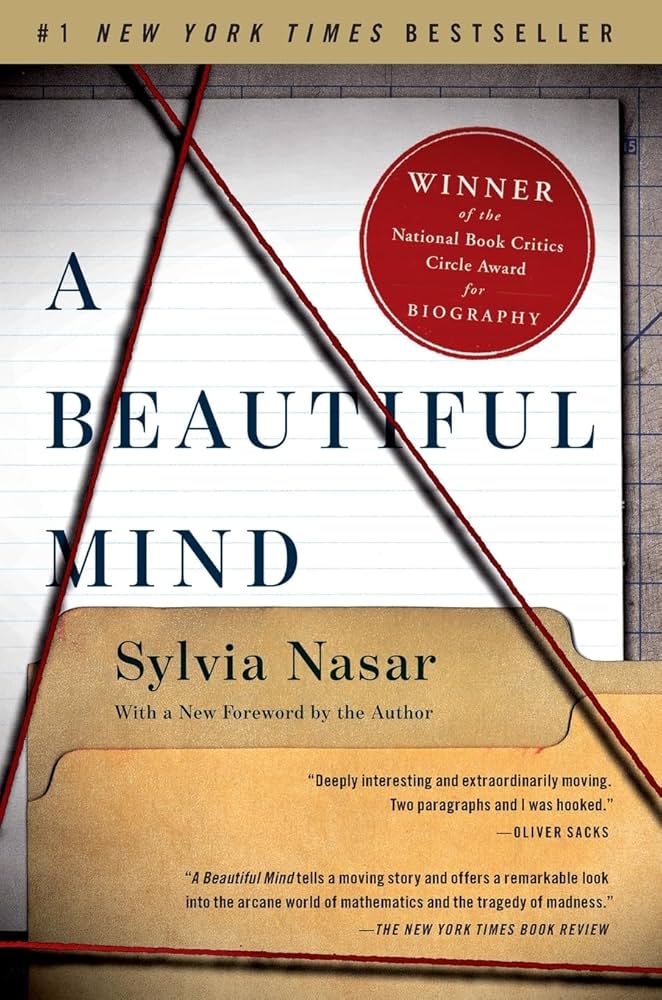
Synopsis: Stories of famously eccentric Princetonians abound—such as that of chemist Hubert Alyea, the model for The Absent-Minded Professor, or Ralph Nader, said to have had his own key to the library as an undergraduate. Or the “Phantom of Fine Hall,” a figure many students had seen shuffling around the corridors of the math and physics building wearing purple sneakers and writing numerology treatises on the blackboards. The Phantom was John Nash, one of the most brilliant mathematicians of his generation, who had spiraled into schizophrenia in the 1950s. His most important work had been in game theory, which by the 1980s was underpinning a large part of economics. When the Nobel Prize committee began debating a prize for game theory, Nash’s name inevitably came up—only to be dismissed, since the prize clearly could not go to a madman. But in 1994 Nash, in remission from schizophrenia, shared the Nobel Prize in economics for work done some 45 years previously.
Pages: 461 Pages
Writer: Sylvia Nasar
Recommendations:

A Beautiful Mind tells the life story of John Nash, one of the most brilliant mathematical minds of the 20th century. Written by Sylvia Nasar, the book blends interviews, letters, notes, and firsthand accounts to paint a detailed portrait of a complex—and often difficult—individual.
While Nash’s contributions to mathematics and game theory are undeniable, this biography doesn’t shy away from his personal flaws. In fact, they are front and center. Nash is portrayed as someone who frequently treated others poorly, acted in his own self-interest, and showed little regard for the people around him. His intellectual brilliance is clear, but it doesn’t translate into likability—and that becomes one of the biggest hurdles in enjoying this book.
A significant portion of the narrative focuses on Nash’s battle with schizophrenia, which deeply impacted both his life and career. The book does a thorough job documenting this period, as well as his eventual remission later in life. However, even with this added layer of struggle and adversity, it’s difficult to find redeeming qualities in the version of Nash presented here.
From a writing standpoint, Nasar’s approach is ambitious. The story is constructed through a mix of sources—quotes, correspondence, and historical records—which creates a rich, layered narrative. For some readers, this style will feel immersive and authoritative. For others, it may come across as fragmented or emotionally distant.
Final Thoughts
This review may seem harsh, but the rating reflects the experience of reading about Nash rather than the quality of the writing itself. If you’re interested in mathematics, psychology, or real-life stories of genius, A Beautiful Mind offers valuable insight. However, if you’re looking for a compelling or inspiring central figure, you may find this biography frustrating.