The Man Trap
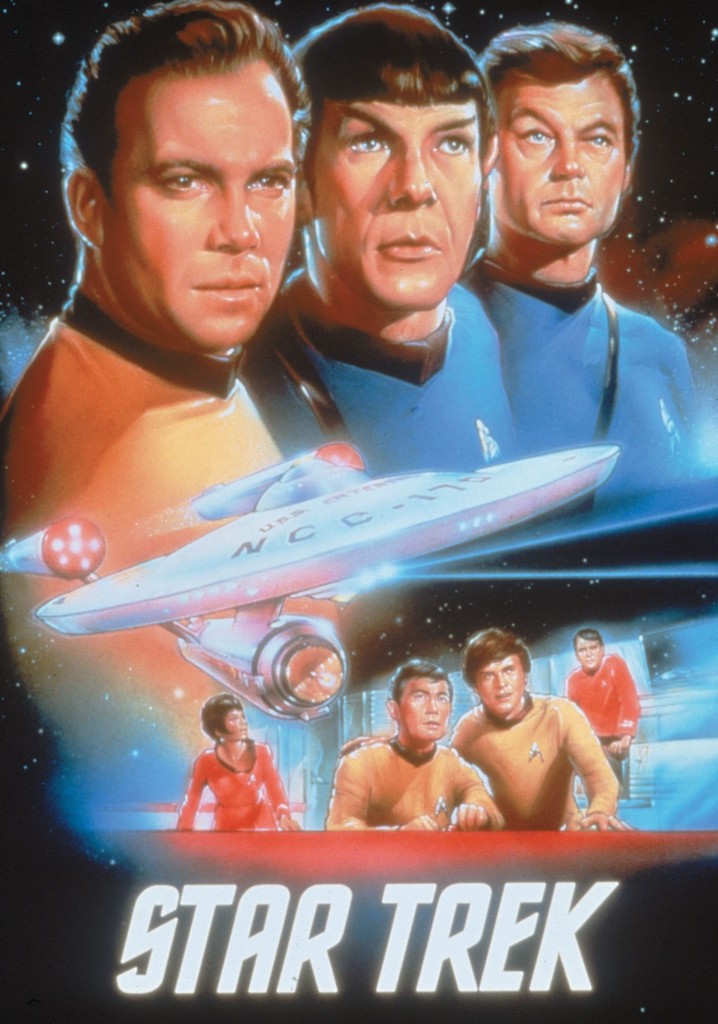
Episode Overview: Professor Robert Crater and his wife Nancy are archeologists, investigating the ruins of a civilization on M-113. Enterprise visits for the annual physical examination required by regulations, but the professor seems oddly reluctant. He insists all he and his wife need is salt to cope with the heat. Then Crewman Green dies, his face marked by odd red rings. Crater says he ate the borgia plant which contains toxic chemicals. But its symptoms do not include the red mottling. Kirk and Spock are determined to discover what’s going on, and doubly so when a crewman on the ship dies the same way as Green.
Air date: 9/8/1966
Directed by: Marc Daniels
Guest Stars: DeForest Kelly as Dr. Leonard Horatio “Bones” McCoy, James Doohan as Lt Cmdr. Montgomery “Scotty” Scott, Nichelle Nochols as Lt Nyota Uhura, George Takei as Lt Hikaru Sulu, Grace Lee Whitney as Yeoman Janice Rand, Alfred Ryder as Prof. Robert Crater, Vince Howard as Crewman, Michael Zaslow as Darnell, Bruce Watson as Green.

At times, I have a hard time judging Star Trek: The Original Series fairly. There are modern Star Trek series that, in my opinion, are simply incredible. Before anyone starts listing all the reasons The Original Series deserves to be considered the greatest Star Trek ever made—I know those arguments and not saying they are wrong.
The reality is that more than 50 years is a very long time. Star Trek was incredibly innovative when it debuted, and many of its ideas were far ahead of television at the time. But even something ahead of its time can’t stay ahead forever.
That brings us to “The Man Trap,” the first episode of Star Trek: The Original Series to air on television.
The episode finds the crew of the USS Enterprise arriving at the remote planet M-113, once home to an ancient civilization. Two scientists, Professor Robert Crater and his wife Nancy, are living there while conducting archaeological research. Captain Kirk, Dr. McCoy, and the Enterprise crew have arrived for what should be a fairly routine annual medical examination.
Of course, nothing aboard the Enterprise ever stays routine for very long.
Soon, crew members begin mysteriously dying, their bodies showing strange signs of severe salt depletion. What starts as a simple medical visit quickly turns into a murder mystery. Something is stalking the crew, and figuring out exactly what it is becomes increasingly difficult as the threat makes its way aboard the Enterprise.
There are moments when “The Man Trap” feels every bit like 1960s television, particularly in its pacing. Modern audiences accustomed to faster-moving science fiction may find portions of the episode slow. At the same time, the mystery works surprisingly well. For a while, there is a genuine sense that the Enterprise crew may be dealing with something far larger and more dangerous than they initially realize.
One thing I particularly enjoy about this era of Star Trek is something modern television has largely moved away from: practical sets.
Yes, you can occasionally see the limitations of the budget. Rocks look like they might actually be made of foam, alien ruins are obviously constructed on a soundstage, and nobody is going to mistake the landscape for footage filmed on another planet.
But I like it.
There is something tangible about those old sets. The actors are actually standing in the environment rather than performing in front of a green screen that will later be replaced with an enormous digitally generated landscape. Modern visual effects can create spectacular worlds, but sometimes those environments become so polished and processed that they stop feeling real.
The sets in The Man Trap may be artificial, but somehow they still have character.
The episode also introduces one of the more memorable creatures from early Star Trek: the salt vampire. By today’s standards the creature makeup is certainly dated, but the concept remains effective. The creature isn’t simply killing for pleasure—it needs salt to survive. That gives the story a little more complexity than a straightforward “monster loose on the ship” episode.
That moral ambiguity would eventually become one of Star Trek’s greatest strengths.
Overall, “The Man Trap” is a decent episode of Star Trek: The Original Series. I wouldn’t rank it among the franchise’s greatest stories, and there are certainly episodes later in the series that better demonstrate why Star Trek became such an enduring cultural phenomenon.
Still, it works as an entertaining science-fiction mystery, gives us some memorable creature effects, and offers an early glimpse at the type of ethical questions Star Trek would continue exploring for decades.
Watching it today requires accepting that television has changed tremendously since 1966. Rather than pretending those differences don’t exist, I think The Original Series is more enjoyable when viewed as a product of its era—an ambitious science-fiction show trying ideas television had rarely attempted before.
It may no longer feel like the future, but you can still see the foundation of the future Star Trek was about to build.